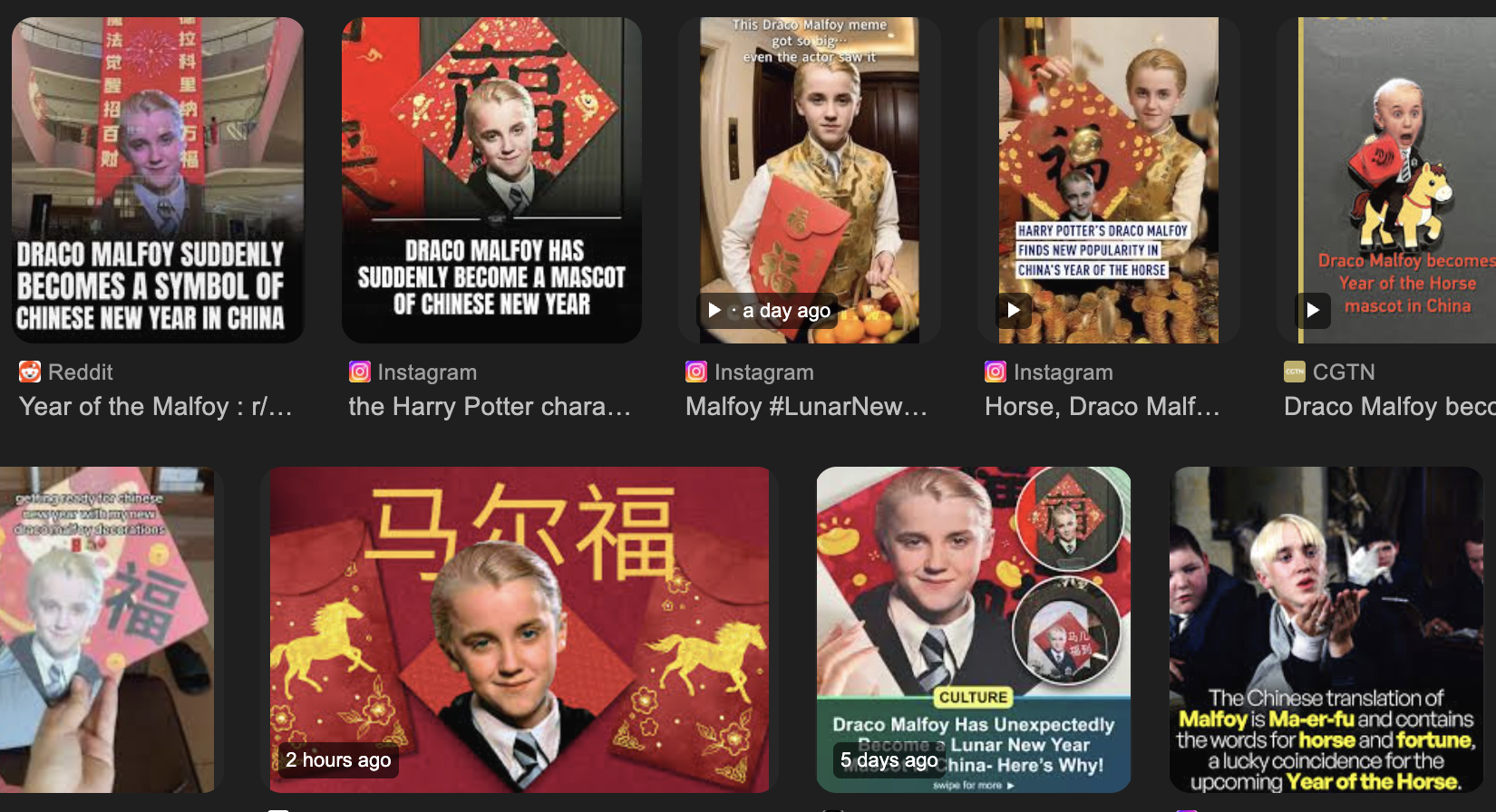
Screenshot Google Search February 2026
small-group art sessions
creative play, a gift to yourself
Adult Sessions @ THE SALON: CREATIVE STUDIO
Wednesdays | 5:30 PM – 7PM
Looking to ignite your creativity or reconnect with your inner artist? Inspired by Julia Cameron’s concept of the Artist Date, these small-group art sessions are designed to be a gift to yourself—a time for creative play, personal discovery and joy.
Location: Lismore Heights
Dates: 20 August - 24 September 2025
Times: 5:30 PM – 7 PM
Ages: Adults
Spots are limited! Early enrolment is encouraged.
What to Expect: 6 sessions
Small Group Setting with Personalised Support
With limited spots, you’ll enjoy personalised guidance and a supportive, inspiring atmosphere that allows you to test ideas, push boundaries, and grow.
For more information and to register, please contact: justinepoplin@gmail.com
Tweens And Teens: Art Sessions In A Studio Setting
Term 2 May 5th - June 30
Mondays 4 - 5:30pm
9x sessions
Looking for a creative outlet for your child after school? Educator, Artist and Writer Justine Poplin invites tweens and teens (ages 12-18) to participate in dynamic, small-group art sessions in a studio setting. These sessions are designed to foster self-expression, creativity, and exploration through a variety of mediums and materials.
What to Expect:
Hands-On Learning: Students will experiment with paint, drawing, collage, sculpture, and mixed media, allowing them to express their individuality and creativity.
Small Group Environment: With limited spots available, every student receives personalised guidance, ensuring a supportive and inspiring atmosphere for young artists to grow and thrive.
Why Choose These Sessions?
Led by Justine Poplin, an experienced educator and visual culture researcher with over 20 years of cross-cultural academic expertise in Australia and China, the sessions offer a unique learning opportunity that blends creativity with critical thinking. Justine's approach encourages young artists to think deeply, experiment freely, and have fun with art.
Whether your child is already passionate about art or looking to discover a new hobby, these sessions offer a chance to develop artistic skills, build confidence, and create something truly unique!
Dates: Mondays
Times: Mondays 4 - 5:30pm
Ages: 12-18
Spots are limited! Early enrollment is encouraged to secure your child’s place.
For more information and to register, please contact justinepoplin@gmail.com
‘Memes, Myth and Meaning in 21st Century Chinese Visual Culture’ - Contemporary East Asian Visual Cultures, Societies and Politics. →
‘Memes, Myth and Meaning in 21st Century Chinese Visual Culture’
This new book will contribute to understanding the impact on global change in China in what is considered in the West as ‘the Asian century’ and what this in turn means for visual culture. The aims of the book are to expand the Western perception of Chinese visual culture and the intertwined complexities of cultural signification. Further, galleries and institutions that collect and teach contemporary Chinese art and design, their audiences and students would benefit from suggested insights into understanding the systems underpinning ideas, skills and influences of the new visual culture in the Asian century.
This book is a part of a series that will be published by Palgrave-Macmillan and co-edited by, Prof Paul Gladston (UNSW), Prof Frank Vigneron (CUHK), Dr Yeewan Koon (HKU), Dr Lynne Howarth-Gladston and Prof Wang Chunchen (CAFA). The series is intended to encompass critical approaches to the wider field of visual cultures including contemporary art.
AAANZ Conference, Auckland, 3-6 December, 2019
Paper Presentation:
Visual Culture debris and critique, Trans-Asia/Australia focus
2018 - 2019 saw the creation and propagation of new memes in global online discourse with the increasing use of digital modes of communication. Globally, new symbolic forms are generated through online participation and offer a multilayered cultural critique that at times can be difficult to interpret. Symbolic use of coded or visual metaphors are culturally specific. Are we able read or understand the messages that are being portrayed from cultures other than our own? New forms of communicating online indicate the loss and/or abridgement of written text and a preference for visual forms of communication to immediately reflect emotional states or beliefs. Some of these visual metaphors are agents for change and advocate for social movements. Others are political commentators reflecting stories of our time through clever, or not so clever assemblages of image and text. Within a global context fragmented readings and true cultural intent may remain trivial visual culture debris, lost in the increasing media noise of online portals. This paper will discuss memes; Chinese and Australian online culture by examining their ‘trans/visualcultural’ significance. Using a comparative approach, plausible transcultural readings of these memes will enable deeper understanding of their cultural significance. This new research will examine trans-Asian flows in Australia indicating perception and reading of visual online assemblages (memes). The exploration of how Australians respond the Chinese memes and reciprocally how Chinese Nationals respond to Australian memes. The methods used to enable this interpretation will utilize a synthesis of participant survey via an online forum that will employ aspects of digital ethnography. The responses from participants will then be used to facilitate cross/trans readings of visual cultural forms as Australians and the world enter what is said to be the 'Asian Century'.
UNSW Art & Design presents at 4A: ‘Memes, Myth and Meaning in 21st Century Chinese Visual Culture’
SYDNEY. 18 JULY, 2019, 6.00 – 8.00PM Register here.
Dr. Justine Poplin (Victoria University Melbourne)
Moderator: Dr. Yu-Chieh Li (UNSW Art & Design)
With the expansion of our social networks and access to information through freely available online sources, the internet can provide an inspiring and highly educational method of working, communicating and researching. Yet not all people have unfettered connection to the global community as mediated through online sources, but instead are constrained by online and offline environments created by political entities.
This presentation outlines the background surrounding internet censorship in mainland China and explores significant expressions of identity through visual culture that proliferate despite censorship. Notwithstanding the restrictions on speech and expression of ideas that are divergent to the harmonious society, the online ecology lends itself to creative pathways to circumnavigate and attain information. The practice of using online visual metaphors is an alternative way to communicate to a like-minded community, simultaneously connecting to the subculture through codes, that were initially created to be read by people in that community. Focussing on the emergence of the Grass Mud Horse phenomenon in 2009, this particular symbol is used to explain how the internet can be driver for new forms of visual culture; outlining how, through online communities new heroic icons emerge. Poplin further claims that due to internet censorship, symbols are created by anonymous online users to circumnavigate the restrictions of internet censorship.
The discussion explores the capacity for understanding this contemporary and unique online visual phenomenon, also demonstrating how it manifests, drives and creates new forms of visual culture with a world spirit in mainland China and beyond. By giving examples of how creativity and online identities manifest and thrive through online communities using coded visual metaphors, the creation and use of the symbolism signifies an ideological departure from accepted and acknowledged Chinese values and belief systems through mimetic usage in art and design.
Presented by UNSW | Art & Design in partnership with 4A Centre for Contemporary Asian Art.
Series organisers: Prof. Paul Gladston and Dr Yu-Chieh Li
Theorising and Historicising Contemporary Asian Art: Critical Reflections on the Social Contexts of Art in/from Asia
Aesthetics, Politics and Histories: The Social Context of Art AAANZ Conference 2018
December 5-7, 2018, School of Art, RMIT University, Melbourne, Australia
Panel Session:
Dr Michelle Antoinette, Monash University
Dr Justine Poplin, Victoria University Australia
Professor Paul Gladston, University of New South Wales
This panel proposes to explore the significances of theoretical and historical work for probing contemporary Asian art and its social contexts. This includes consideration of such work from within the academy, as well as within the work of art museums, galleries and other art institutional platforms. What use is theory to critically examining contemporary Asian art's aesthetics, politics and histories? What is the significance of an historical lens in informing and shaping aesthetic and social narratives of contemporary art in/from Asia? Rather than a specific focus on any one Asian country, this panel proposes a regional lens to examine critically, intersecting themes and issues of relevance in discussing contemporary Asian art. In particular, it reflects on the relevance of theory and history in articulating distinct aesthetic and social narratives for contemporary Asian art.
In exploring the ‘contemporary’ and ‘Asia’, the panel invites reflection on the diverse temporalities and social contexts of contemporary art. In this way, the panel session responds to this year's AAANZ theme especially by seeking to expand the discourse of visual arts in our region to include contemporary Asian art and museum perspectives. Particular attention will be paid to recent debates related to the term contemporaneity that have sought to extend critical legitimacy to experiences and representations of modernity divergent from those conventionally associated with western(ized) post-Enlightenment discourses. The panel will attempt to look beyond the becalming perspectivism of those debates towards the possibility of a critically dynamic contemporaneity located in productive interaction between differing cultural outlooks.
Introducing Dr. Poplin
This week on the 7th August I was awarded a Doctoral Degree (PhD) for my thesis 'Cultural flows in the Digital and Beyond: the Potency of a Symbol in Mainland China' from Victoria University Melbourne, Australia. It has been a journey of resilience, patience, isolation, knowledge building and sheer determination. Now, to procure a secure & ongoing position in academia.
Thesis Abstract
Cultural Flows in the Digital and Beyond: The Potency of a Symbol in Mainland China
In the twenty-first century, access to a fragmented global culture through online portals has created what Bauman (2011) calls a ‘liquid culture’.As screen-mediated ways of being grow and propagate through our art galleries, museums and online social media feeds, how are we to read this emergent visual grammar so that we can motivate, move or elevate our ways of knowing?
This thesis explores the symbolism created in mainland China in 2009 through an emergent and retained set of subversive symbols: the Grass Mud Horse lexicon in Chinese visual culture and beyond. To date, theorists have focused predominantly on internet memes, independent of other multimodal forms generated and transitioned from symbolic online internet memes to offline symbolic use in art and design. I investigate ways of deciphering and articulating these visual gestures through accessing cultural keys. I claim that the new symbolism generated as a result of internet censorship in mainland China demonstrates a generational and ideological shift; it does so through the creation and propagation of new visual grammar in twenty-first century China. To scaffold my claims, I explore an overview of historical changes in the visual articulation of Chinese culture. The use of Mao Zedong as a symbol in art and design clearly illustrates a shift from veneration to subversion. By exploring the symbolism in visual culture dating from 1912 to China’s digital age, this study reveals a transition that proposes a new heroic icon, the Grass Mud Horse.
The creation of this new symbolism has political relevance; it deploys practices and art forms to signal, dissolve and raise awareness of social and ideological change. This study maps the new symbolism to test the claim that over time, some symbols may lose potency, while others remain and reflect ideological shifts. The findings will be demonstrated through a synthesis of online digital ethnography, including semiotic and compositional interpretation, and incorporating multimodal discourse analysis. This study will challenge the Western perspective of Chinese stereotypes in visual culture by working with and interpreting visual cultural flows in the digital age.
“Liberating Technologies”: Digital Cultures of Protest in China
Digital Conversations Research Seminar: Arts and Cultural Management Program
“Liberating Technologies”: Digital Cultures of Protest in China
Dr Rachel Marsden (University of Melbourne) | Justine Poplin (Victoria University)
Curated by Dr Natalia Grincheva
Date: October 18, 2017 | Time: 12.30pm-1.30pm
Venue: Arts West, Digital Studio (Level 2), the University of Melbourne
How has the digital era changed the power dynamics between governments and publics? What happens beyond the Great Firewall of China? This seminar draws examples from the Occupy Movements and uprising Digital Memes sub culture to explore how cultures of protest in China manifest through “liberating technologies” of digital media.
http://arts.unimelb.edu.au/research/digital-studio/events/liberating-technologies-digital-cultures-of-protest-in-china
12th International Conference on the Arts in Society Research Network:: American University of Paris,14-16 June 2017
Mapping the Meme in China: Online and Offline Signification
In the 21st century access to a fragmented culture through online portals has created a somewhat scattered heteronomy of visualities. The use of gesture in visual culture can be related to an action, a symbol, or solely for the image to have "an effect" on the audience. As these visual gestures grow and propagate through our art galleries, museums and online social media feeds, are we able to read this emergent visual grammar to motivate, move or elevate our ways of knowing? This paper explores symbolism created in Mainland China in 2009 - 2016 and investigates ways of articulating and deciphering these gestures through accessing cultural keys. The creation of the new symbolism is rooted in political relevance and deploys practices and art forms to signal, dissolve and raise awareness of social and ideological change.
The study maps the symbolism to test the claim that over time some symbols may loose potency. Findings will be related through a synthesis of semiotic/compositional interpretation and multimodal discourse analysis. The aim of the study is to deepen the Western perspective on Chinese stereotypes in visual culture by working with, and interpreting cultural flows in the digital age.
Keywords: Visual Culture, Internet Memes, Chinese Art
Stream: Special Theme 2017: Gestures that Matter
CULTURES OF KNOWLEDGE: CREATIVE ECONOMY AND CHINA SUMMER SCHOOL AND CONFERENCE CURTIN UNIVERSITY, PERTH, 7 – 11 FEBRUARY 2017
Cultures of Knowledge: Creative Economy and China.
The Summer School + Conference is an initiative of the Digital China Lab. Both events are supported by the Centre for Culture and Technology (CCAT) and the School of Media Culture and Creative Arts (MCCA) at Curtin University.
Presented paper title:
Myth, meme and meaning: mapping the meme in China, online and offline signification
Abstract
As a result of rapid digital innovation in recent years within the Chinese blogging community, a new generation of makers are creating and utilising traditional and digital visual cultural forms for extending communication values. This rise in sharing ideas online by amateur and or anonymous producers has invigorated the co-creation of new symbols; including memes, icons, artefacts and goods of desire. Online co-creation portals move knowledge faster than ever before, albeit the widespread censorship policies in Mainland China. The rise in this way of communicating signifies new ways of communicating creatively, reflecting how powerful the internet is in connecting people, ideas and community. Furthermore, the movement of new symbolism generated online now moves into broader visual culture realms offline, signifying that the internet is a driver for new forms of creative currency reflecting newfound ideologies in the digital age. This research paper examines and maps online co-creation, the dissemination and consumption of Chinese visual culture; including, new symbols/memes, online video and artefacts.
New Heroes, Ideological Shifts and Chinese Visual Culture
Justine Poplin
Poplin explores the hero and new symbolism in 21st century mainland China. Online social media culture is a testing ground for visual metaphors that represent changing tides in China in the digital age. Poplin argues that a new hero has risen from online collective co-creation.
Symbolism in Chinese Visual Culture: A New Visual Grammar in Mainland China Iterates Shifting Ideologies
By Justine Poplin.
Published by The International Journal of New Media, Technology and the Arts
http://ijamt.cgpublisher.com/product/pub.232/prod.80